Layout first
Before choosing tiles, decide where everything will go: toilet, washbasin, shower or bath, washing machine, towel warmer. The water and drain points for each are run according to this. Once the tiles are on, moving a point means breaking open the wall.
If the washing machine will live in the bathroom, it needs its own socket, water supply and drain point. A washing machine vibrates, so put it on a flat, solid part of the floor with no hollow space under the tiles.
In a small bathroom a wall-hung toilet with a cistern built into the wall saves space. But this has to be planned in advance, because room is set aside in the wall for the cistern.
Pipes
In an older apartment the wish to keep the old pipes is understandable, but it is usually a mistake. An old pipe hidden behind tiles will leak one day, and to replace it you will have to break the new tiles.
Before pipes are closed into the wall they should be pressure tested: the system is filled with water and left for a while so that any drip shows up. The drain pipe also needs a slight slope, otherwise water will not flow away, it will sit and start to smell.
Keep a small access hatch next to the meter and the main valves. Later you will be able to change a filter or shut a valve without breaking tiles.
A protective layer against water
Tradesmen call this waterproofing: a special layer that water cannot pass through, applied to the floor and the lower part of the walls. Tiles and the joints between them do not hold water completely, it slowly seeps down. Without the protective layer that water goes through the floor to the neighbour below.
The layer covers the whole floor and goes a little way up the walls, higher on the shower side. Particular care goes into the corners and the places where pipes come out of the wall, because that is where water most often finds a way through.
In practice we often see that when people want to save money, this layer is the first thing written off as "unnecessary". But repairing the neighbour's ceiling costs many times more.
Ventilation and electrics
If the air in a bathroom does not change well, the tile joints turn black and mould appears on the ceiling. If the building's ventilation duct draws weakly, a quiet extractor fan is fitted.
Electrics in a room with water need special attention. The circuit should be protected by its own breaker and earthed, and sockets and lights should be the kind made for damp rooms. Talk this through with your electrician in advance.
Tiles
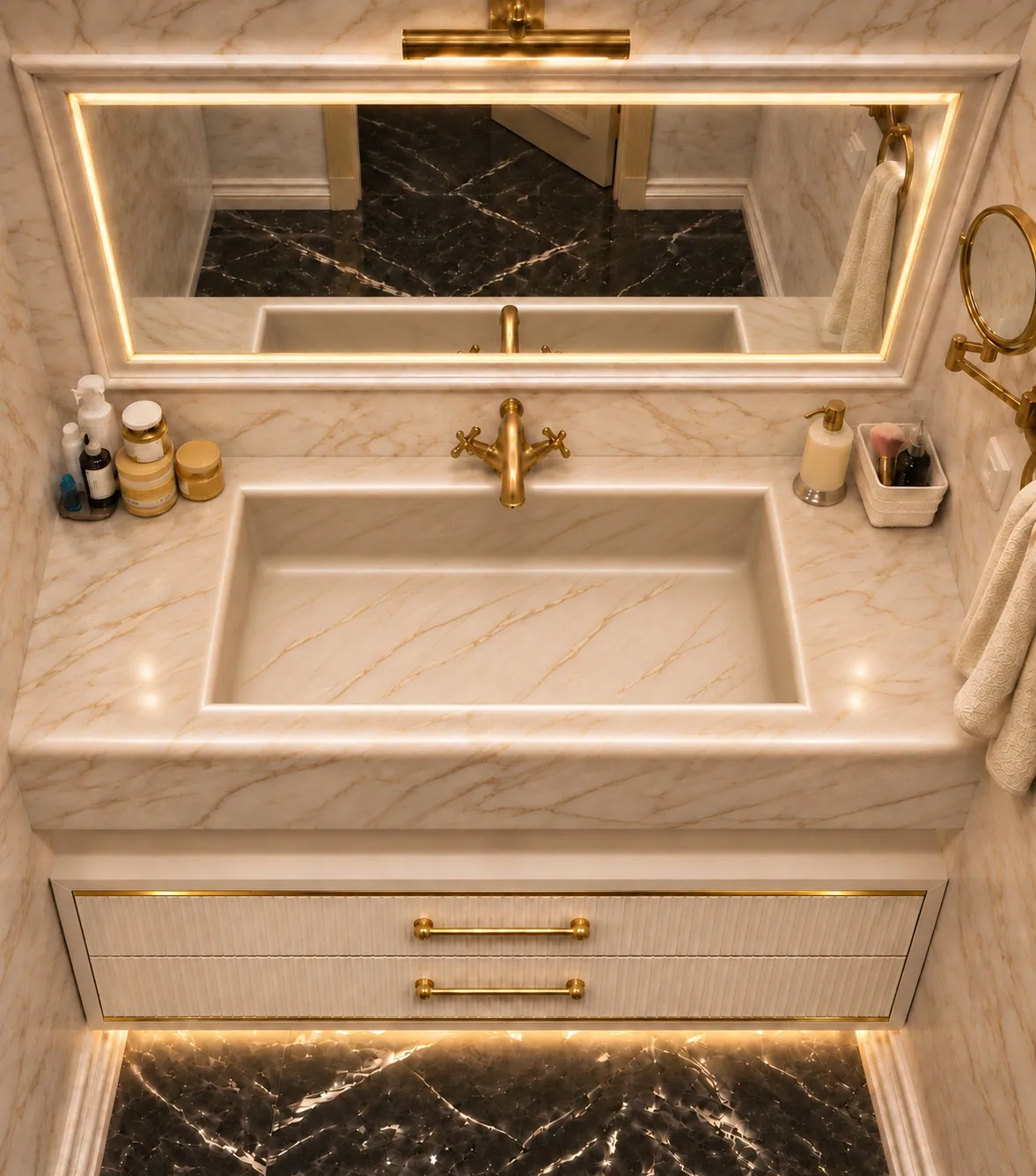
To lay tiles straight, the wall has to be straight, otherwise no tiler can make it look good. Draw the tile layout on paper in advance: cut pieces should end up in corners, not in plain sight, and the toilet and washbasin should line up with the tile joints.
The grout for the joints also needs some thought. In the shower area use grout that resists water and mould, and keep in mind that light-coloured joints get dirty quickly over time.
Keep a few spare tiles after the renovation. If one cracks a year later, finding the same colour and batch is very hard.
We also do bathroom renovations on their own, without renovating the whole apartment. The pipes and the waterproofing layer are photographed before they are closed up, and you can see the work through your personal link.