It all starts with light
A dark room always looks smaller than it is. So the first job is to remove anything that blocks daylight: thick, heavy curtains, a tall wardrobe in front of the window, boxes on the sill. A light, sheer curtain works better during the day, with a separate blackout curtain for the evening.
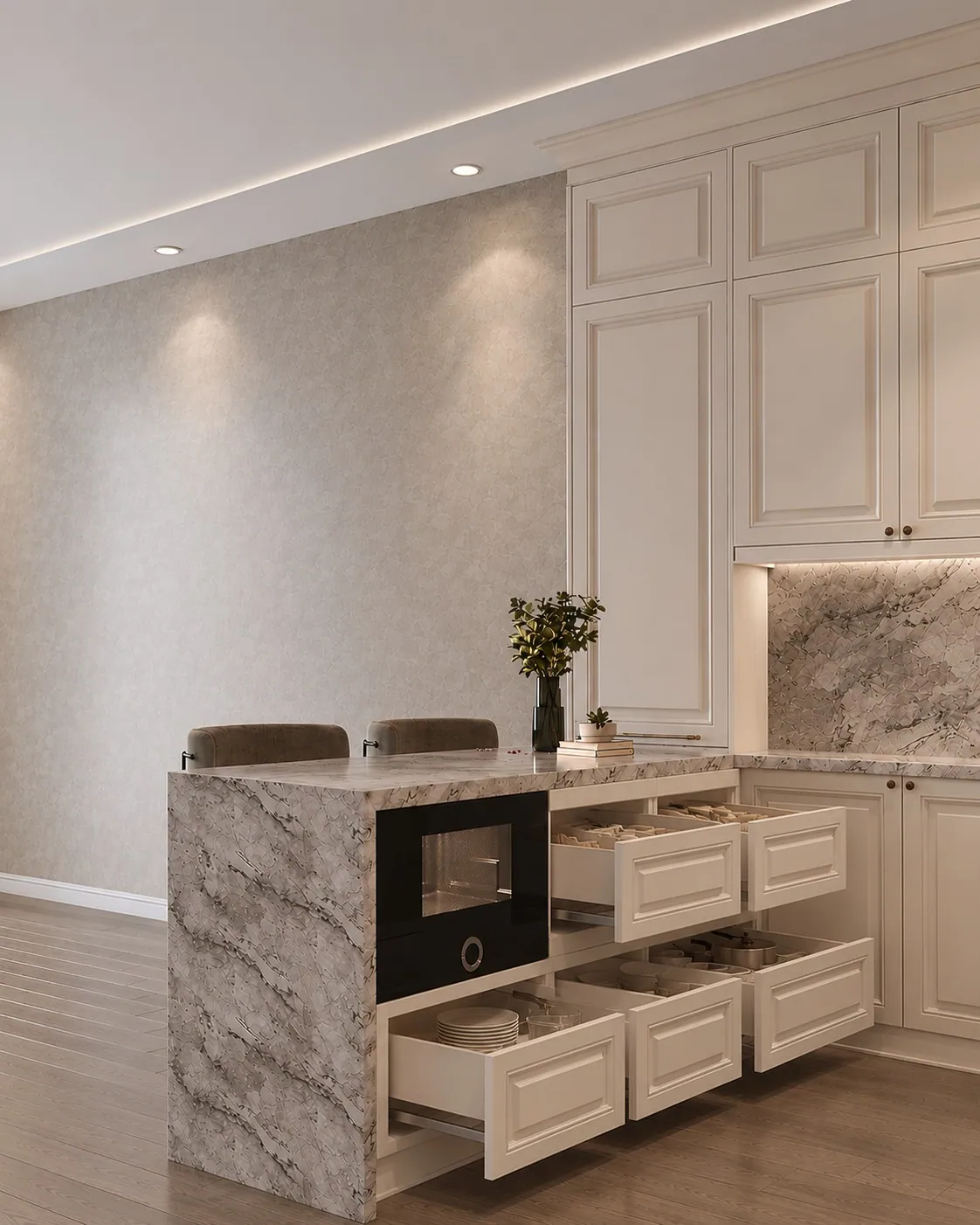
Evening light has a rule too: a single ceiling lamp in the middle makes a room smaller, because it leaves the corners dark. Hidden lighting along a wall, a couple of wall lamps or a floor lamp open up the corners, and the room immediately feels bigger.
Colour: light, but not boring
Light colours reflect light and seem to push the walls back. That does not mean painting the whole home white. Soft warm tones like beige, light grey or milky white feel both spacious and cosy. When the walls and ceiling are the same or a very close colour, the line between them disappears and the room looks taller.
In a very small apartment there is one more trick: use the same flooring throughout. A different tile or laminate in every room chops the apartment into small pieces. One continuous floor carries the eye from room to room.
Mirrors and glossy surfaces
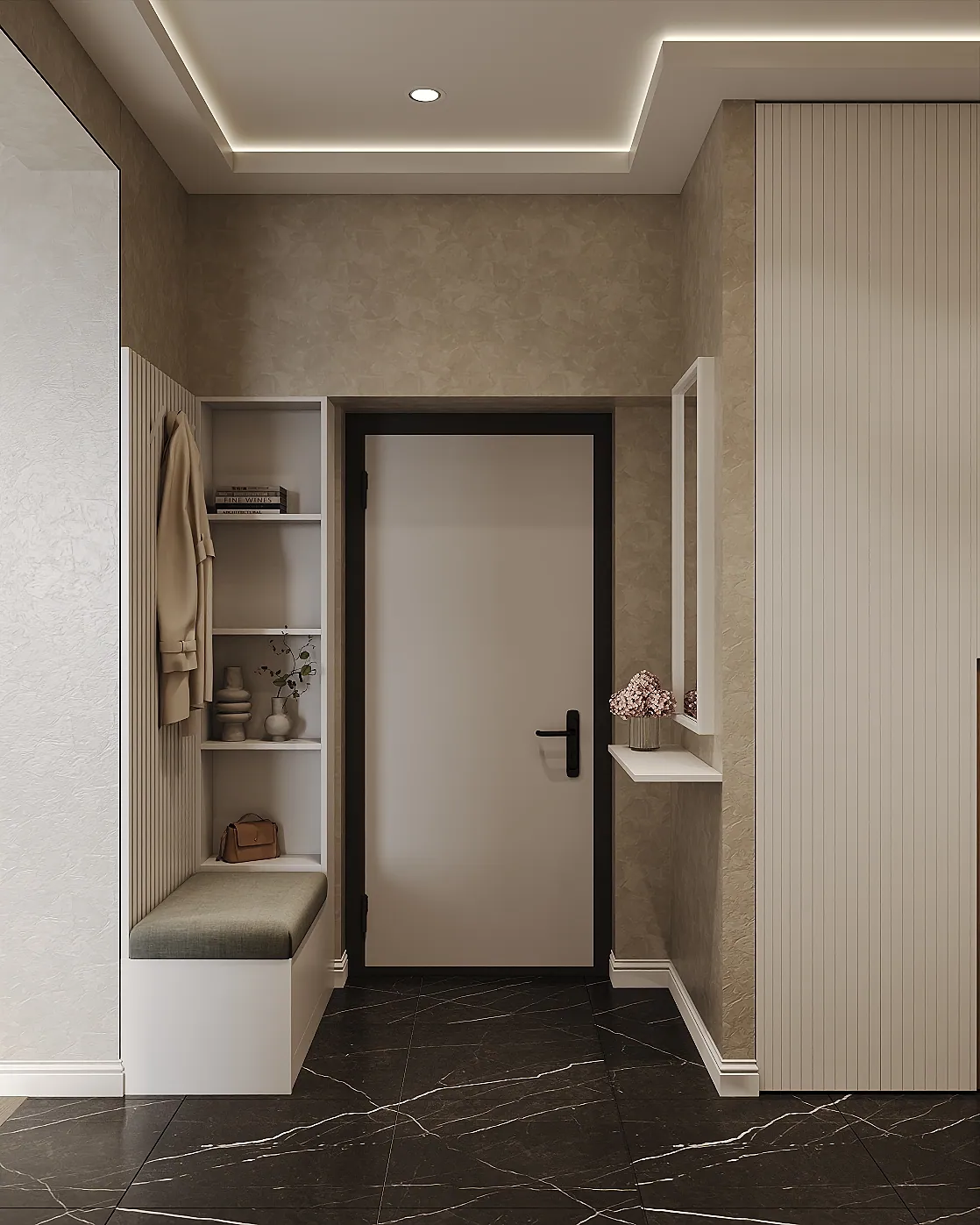
A large mirror is the cheapest way to "expand" a small apartment. Hang it opposite or next to a window and the daylight seems to double. A tall mirror in the hallway opens up a narrow corridor and is handy for a last look before you leave.
Glossy kitchen and wardrobe doors also bounce light around. Keep it in proportion though: when everything shines, the eye gets tired and fingerprints show everywhere. One or two large glossy surfaces are enough.
Hide things and the room grows
What crowds a small apartment is not the number of things but the fact that they are on display. The same amount of stuff behind closed doors makes a completely different picture. A few practical options:
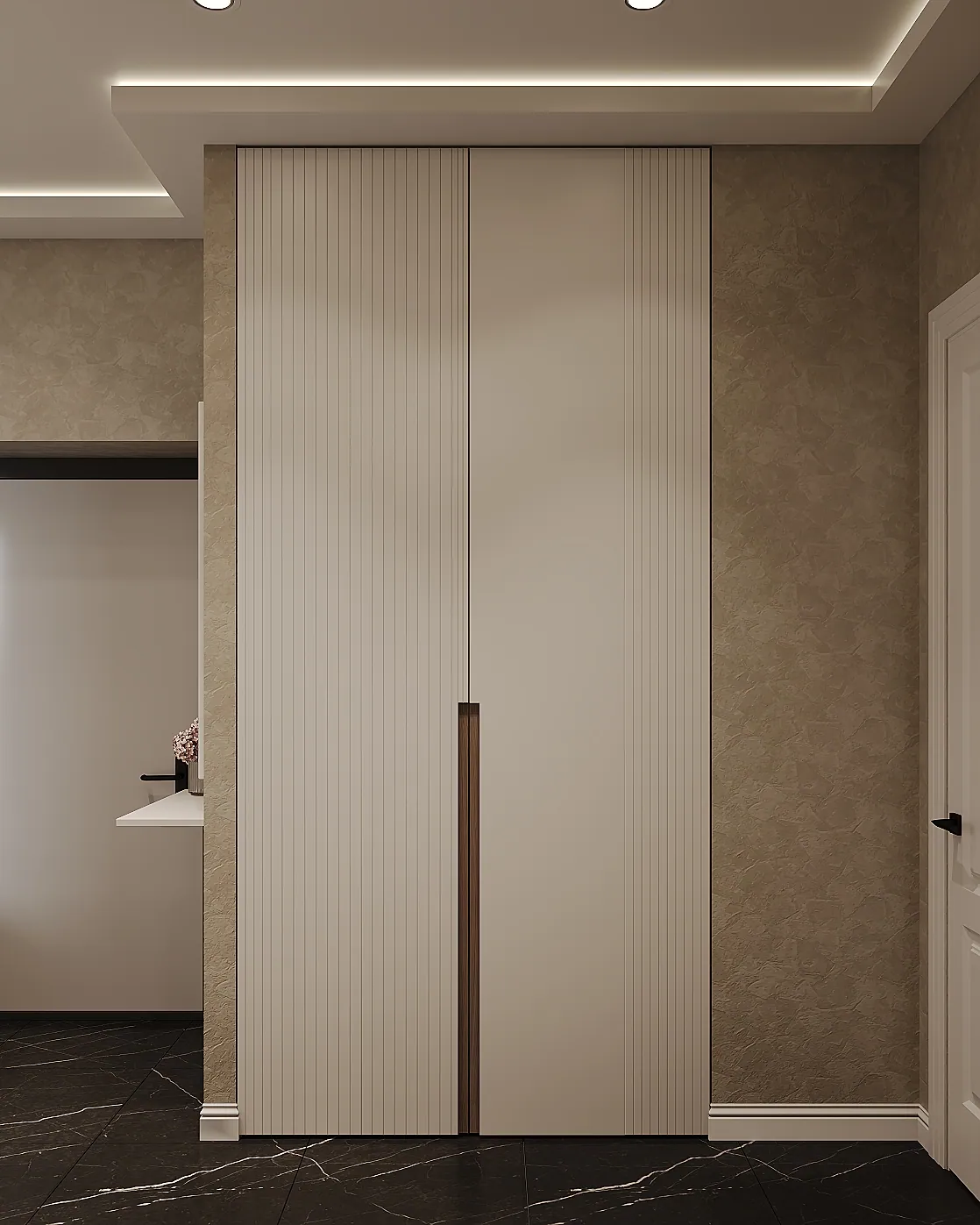
- A tall built-in wardrobe up to the ceiling, fixed to the wall, so the space at the top works too
- Drawers under the bed, or a bed that lifts up with storage underneath
- Shelves above the door and around the window, where the wall is empty anyway
- Wardrobe doors in the same colour as the wall, so the wardrobe reads as part of the wall
Furniture size and doors
In a small room a big, heavy sofa dominates everything. Furniture on legs with slim arms looks lighter, because you can see the floor underneath. The more floor the eye can see, the bigger the room feels.
Doors take up space as well: a swing door needs a clear strip along the wall. In some places you can remove the door altogether or use a sliding one, for example between the kitchen and living room or at the entrance to a walk-in wardrobe.
One last tip: give each room one main idea. When every corner has its own colour, texture and decor, a small room becomes tiring. One or two standout pieces against a calm background read much better.