A room or a closet
A separate walk-in wardrobe, a small room you step into to choose your clothes, is convenient but needs space. With shelves on both sides, there has to be enough room in the middle to turn around comfortably. Otherwise it becomes a narrow corridor.
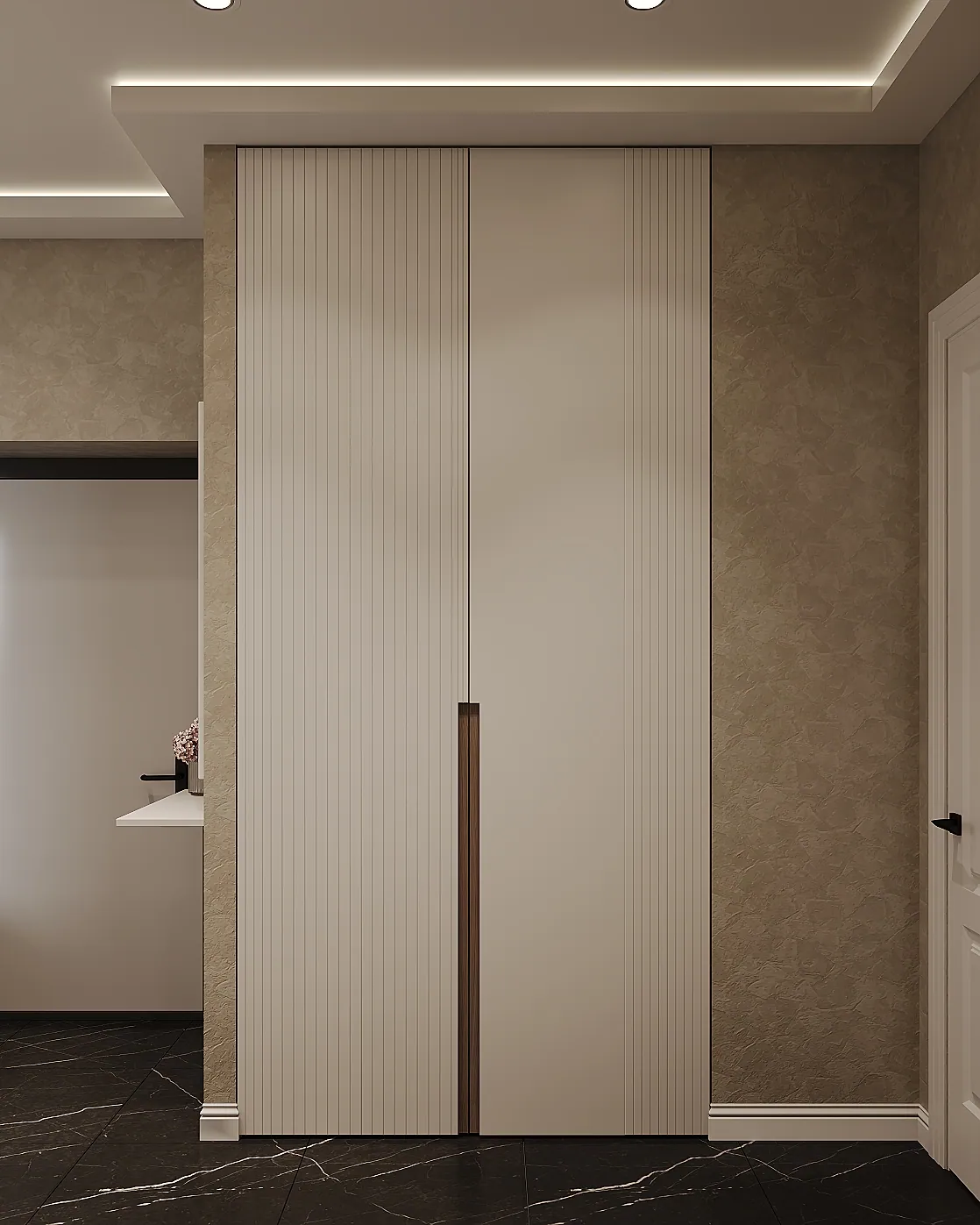
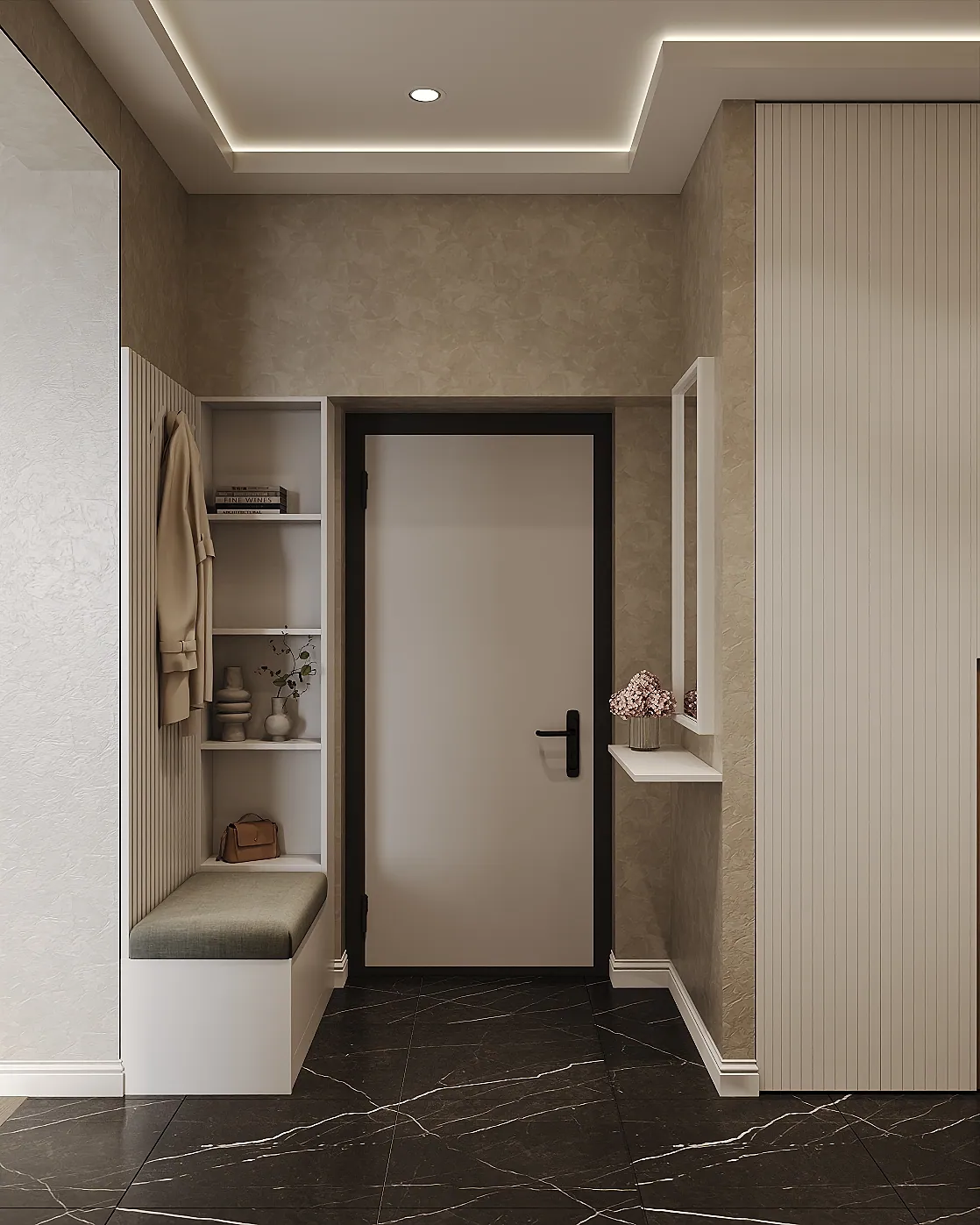
If space is tight, a built-in closet is the better choice. It looks like part of the wall, goes up to the ceiling and holds more on the same footprint. Sometimes a small wardrobe area can be carved out of a corner of the bedroom or the end of a hallway.
Sort your clothes by type
Before you start planning, open your current wardrobe and look at how much of each thing you have. This simple step prevents most mistakes.
- Long hanging clothes: coats, long dresses. They need a tall section.
- Short hanging clothes: shirts, jackets, trousers. Here you can fit two rails, one above the other.
- Folded clothes: jumpers, T-shirts. These go on shelves or in drawers.
- Small items: underwear, socks, belts, accessories. Shallow drawers with dividers work best.
- Shoes and bags: they look better on their own, on slightly angled shelves.
Height and the easy-reach zone
What you use most should be at eye and hand level. Seasonal clothes, duvets and suitcases go on the highest shelves, since you need them once or twice a year.
The very bottom is for shoes and heavy boxes. Stick to this order and you will not be hunting for the same shelf or climbing on a chair every day.
Light and air
In a dark wardrobe it is hard to tell a black jacket from a navy one. Small LED strips inside the shelves and a light that comes on when the door opens make a real difference. The light should be close to daylight in colour so you see your clothes as they really are.
Air matters too. In a closed wardrobe with no airflow, clothes absorb moisture, especially in Baku's humid summers. A small vent in a walk-in wardrobe or a gap under the door prevents smells and mould.
Doors or open shelving
Open shelving looks great and makes clothes easy to find, but dust builds up quickly and everything is on show. If you are not ready to keep it tidy every day, a closet with doors is more practical.
Sliding doors save space in narrow rooms. Hinged doors let you see the whole closet at once. Put a mirror on the door and you will not need to find a separate place for one.
At Interium we design wardrobes and closets to measure, make them and install them with our own team. When we come to measure, we first ask how many clothes you have, and only then talk about the size of the closet.